
Printing is an industrial trade with an industrial address
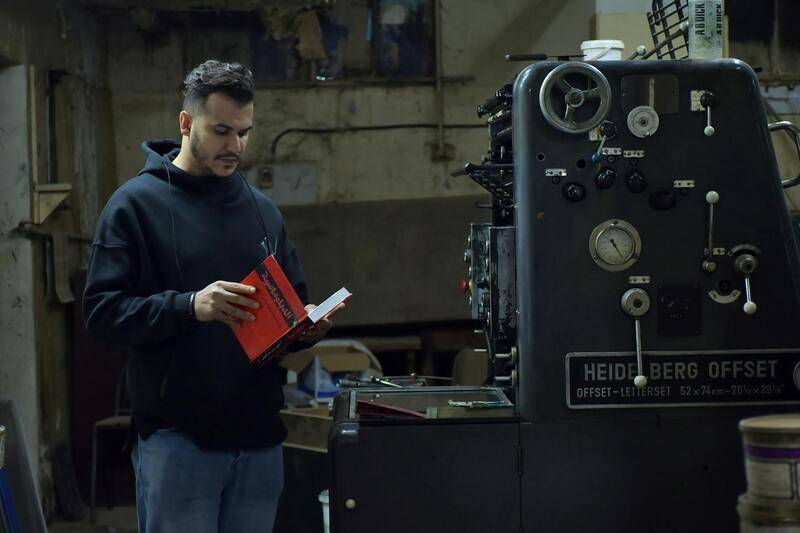
Presses are heavy, loud and need loading access. Cutters, folders and laminating lines take floor space. Paper arrives on pallets and finished work leaves on them. None of that fits above a shop in a busy retail street, which is why most of Singapore's actual production printing sits in industrial estates rather than anywhere you would walk past.
Knowing roughly where the work happens changes how you buy it. It explains why a quote from a shopfront in town and a quote from an estate can differ, why collection times are what they are, and why the same job can be next-day in one place and three days in another.
The clusters
Ubi and Kaki Bukit
The densest concentration of print and print-adjacent businesses on the island. Multi-storey industrial buildings here hold offset houses, digital shops, finishing specialists, sign makers and paper merchants, often in the same block. The practical effect is that a job needing an unusual finish can move between two units without leaving the building, which is why turnaround on complicated work is quicker here than the individual quotes suggest.
Kallang, Bendemeer and Aljunied
Older industrial stock closer to town. A mix of established offset printers and smaller digital operations. The advantage is proximity: close enough to the CBD for a courier run to be quick and cheap, far enough out for the rents to allow real machinery.
Jurong, Tuas and the west
Larger footprints, larger runs. Packaging converters, corrugated box plants and high volume web work sit out here because they need the space and the vehicle access. If your job is measured in pallets rather than boxes, this is usually where it is made regardless of who you bought it from.
Woodlands, Yishun and the north
A smaller cluster serving the northern business parks and the industrial estates around them, with a mix of general commercial print and label work.
The CBD and the malls
What you find in Raffles Place, Tanjong Pagar or a mall basement is mostly document work: copying, binding, large format posters, name cards from stock, urgent items while you wait. These shops are genuinely useful and they are not usually printing your 5000 brochures themselves. They are taking the order and sending it to an estate.
What this means for your quote
When a shopfront quotes a production job, the price includes a margin for passing it on. That is a fair fee for someone managing the job, checking the proof and handling the problem if one arises, and for a business without a print buyer it is often money well spent. It is worth knowing you are paying it, though, particularly on repeat work where the specification never changes.
The reverse case matters too. Going direct to a production house works well when you know exactly what you want and can supply a clean file. It works badly when you need someone to sit with you over the artwork, because that hand-holding is the service the shopfront was charging for.
- One-off, urgent, small: a nearby shop is almost always right
- Repeating, specified, larger: a direct relationship with a production printer usually costs less over a year
- Unusual finishing or materials: ask who is actually doing that part, since the answer tells you where the risk sits
- Packaging or very long runs: the west, whoever you order through
Access, collection and the timing nobody quotes for
Industrial buildings have loading bays with their own hours, and many have goods lifts that stop before the offices do. A job finishing at 6pm may still not leave the building until the next morning, which is the sort of detail that turns a promised two days into three.
If you are collecting yourself, check parking before you drive out. Loading bays in older estates fill up, and a saloon car collecting ten cartons is a different proposition from a van collecting the same. For anything above a couple of boxes, letting the printer arrange delivery is usually cheaper than your own time and fuel.
Delivery into the CBD has its own constraints: loading bay bookings, delivery windows in office towers, security desks that will not accept goods for a tenant. Those are covered in more detail in getting print delivered in Singapore, and they are worth reading before you promise a colleague that the boxes will be at reception by lunchtime.

Paper merchants shape what you can actually order
Printers do not hold every stock. They hold a working range and buy the rest from merchants, most of whom warehouse locally. That arrangement is invisible until you ask for something outside the range, at which point it becomes the whole schedule.
Common stocks - white uncoated in the usual weights, gloss and silk art board, standard name card stock - sit on the shelf and can run the same day. Anything else is a delivery away. A merchant delivery is often next morning, so a specialty stock frequently adds one day rather than a week, but it also comes in full pack quantities. Ordering 200 sheets of an unusual board can mean buying 250 because that is the pack, and the price reflects it.
Two consequences worth planning around. First, if a job repeats, ask whether the stock is a held line. A brochure printed on something the merchant discontinues becomes a design problem a year later, and matching a discontinued stock is guesswork. Second, if you are choosing between two similar papers, ask which one the printer already stocks. The answer sometimes saves a day and a surcharge for no visible difference in the finished piece.
Imported specialty papers - heavy cotton stocks, coloured art papers, unusual textures - take longer, sometimes a couple of weeks, since they ship rather than sit in a local warehouse. Decide on those early in a project rather than late.
Questions that tell you what you are dealing with
You do not need to interrogate a supplier. Four questions establish most of what matters.
Is this printed in house? A straight answer either way is fine. What you want to avoid is discovering the outsourcing only when something goes wrong and nobody will own it.
What equipment runs this job? Digital press, offset, or wide format. The answer tells you what quantity the price is optimised for, and whether a slightly different quantity would cost noticeably less.
Where does the finishing happen? If the lamination or binding leaves the premises, the schedule includes a transport leg that may not be in the quoted turnaround.
What is the cut-off for today's production? Every printer has one, usually early afternoon. Knowing it is worth more than a general promise of speed.
Working with us
We print in house and we say so when a specialist finish goes out, along with what that adds to the schedule. Quotes state the production days separately from the delivery, so you can see which part you can compress by collecting or by adjusting a finish.
For a business setting up its print for the first time, setting up print for a new Singapore business covers what to order and in what sequence. If you want to compare what different types of shop are suited to, the print shops and companies section goes through it, and printing costs and pricing explains where the money goes on a typical job.
Send us the job with your deadline and where it needs to end up, and we will tell you what is realistic, including when a shop nearer you would get it done faster.
