
During the four peak seasons, everyone books at once.
Singapore's calendar includes more major festive periods than most markets. Each one triggers a surge in print products such as greeting cards, red packets, hampers, gift packaging, promotional flyers, in-store posters, corporate gifts, and event collateral. These waves are predictable down to the week, allowing the print industry to anticipate its peak periods.
The most valuable aspect of this article is the discussion on lead times. Almost every issue related to festive prints stems from timing constraints, rather than design or budget limitations. Often, artwork is approved just ten days before the event, only to realize that ten days is insufficient. In today's competitive market, every other business is also vying for the same limited production slots.

The four peaks and what they need
Chinese New Year
The year's largest print peak, characterized by the tightest conventions, typically includes items such as red packets, greeting cards, hampers, gift boxes, in-store decorations, and promotional materials.
Red packets have the most specific requirements. They are typically printed on heavier stock to maintain their shape, often featuring hot foil stamping in gold or a metallic ink. The shade of red is also important; a red that shifts slightly towards orange or pink is noticeable. This observation highlight the strong argument for specifying a spot color rather than a process build. Additionally, foiling and specialty finishes add extra production days.
Because the date changes according to the lunar calendar, the peak shifts each year. Instead of assuming a fixed week in February, work backwards from the actual date.
Hari Raya Puasa
Greeting cards, duit raya packets, open house invitations, promotional material, and packaging are commonly used during the celebration. Green and gold are frequent color choices, although they are not universally applied. The design conventions for this celebration differ from those of Chinese New Year in significant ways, and it is important to respect these differences rather than treating them as interchangeable.
The preparation period builds up throughout the fasting month, causing demand to increase several weeks before the holiday itself. If your material is intended to reach people before the holiday, that ramp-up is your real deadline.
Deepavali
Greeting cards, invitations, in-store materials, and gift packaging often feature rich colors and metallic finishes. These elements typically require foiling capacity and additional production time.
Christmas and year end
Corporate greeting cards, calendars, year-end reports, gift packaging, and event materials all peak at the same time. This peak coincides with two other demands on the same production capacity: annual reports and the diaries and calendars that businesses distribute for the upcoming year. This is a busier period for print than retail demand alone would suggest.
Lead times that actually work
These are working days, counted backwards from when you need the finished item in hand, not from when it leaves the printer.
- Standard flyers and posters, digital print: allow five to seven working days in peak season, against two to three off-peak
- Greeting cards, offset, no special finishing: ten to twelve working days
- Red packets or cards with hot foil or embossing: fifteen to twenty working days, since finishing is a separate process with its own queue
- Custom gift boxes and rigid packaging: twenty-five working days or more, because tooling and assembly are involved
- Calendars and diaries: book in September or October for year-end delivery
Add a week to all the following if the artwork requires more than one round of approval, which it usually does. Also, keep in mind that the days immediately preceding a public holiday are not considered working days for anyone, including couriers.
Why does capacity tighten rather than disappear?
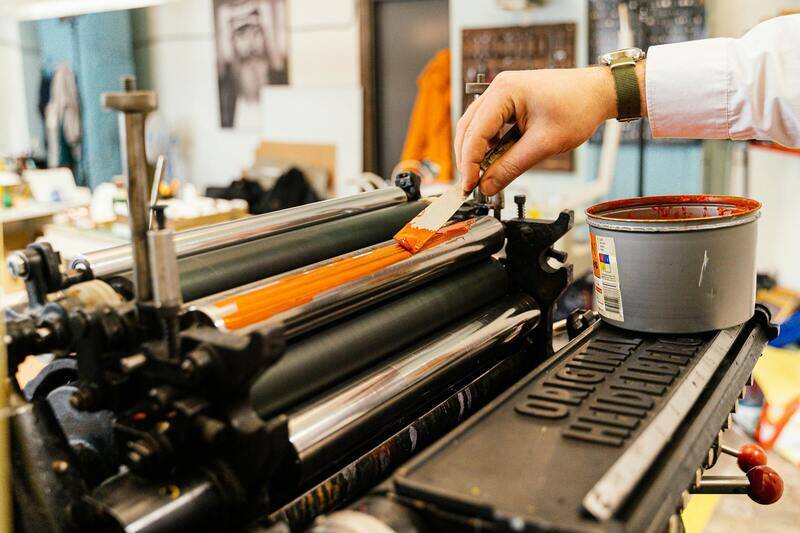
The constraint during festive peaks is rarely the printing press. Instead, it is the finishing department: foiling, embossing, die-cutting, hand-assembly, and packing. These stages have far less capacity compared to printing and are disproportionately used during festive periods.
This leads to a practical rule. If your job requires foil, embossing, or hand-finishing, book it early and treat that booking as the real deadline. If your job involves simple four-color printing with no special finishing, you have significantly more flexibility later in the season.
It also provides a lever if you are behind schedule. Opting for a metallic ink instead of a foil, or choosing a standard shape over a die-cut, can transform an impossible job into an achievable one. The result may not be identical, but a good piece delivered on time beats a perfect one delivered late.
Ensuring accuracy in bilingual and multilingual festive messages
Festive materials often include English alongside Chinese, Malay, or Tamil. This is where many late errors appear. The issues are consistent:
- Fonts that are not embedded may cause characters to substitute or drop out entirely when printed.
- The text supplied as an image is at screen resolution, which prints softly.
- The text uses a mix of traditional and simplified Chinese characters within the same piece.
- Nobody in the approval chain could read the non-English text, so errors slipped through the proofing process.
Have a native reader check the proof, and have them check the printed proof rather than the design file. The file-preparation side of this is covered in the article on printing in two languages.
Design conventions worth checking
Colours, symbols, and greetings carry meanings that vary between communities. Using the visual language of one festival for another can appear careless. If you are producing material for a festival outside your own familiarity, ask someone who observes it to review the design before it goes to print. This costs nothing and prevents the kind of mistake that is remembered.
A planning calendar that works
Setting these as recurring reminders means the annual scramble mostly disappears.
- September: brief and order year-end calendars, diaries and Christmas cards
- October: confirm Chinese New Year concepts and book finishing capacity, even without final artwork
- November: Chinese New Year artwork to print if it involves foil or custom packaging
- Six weeks before Hari Raya: artwork approved and at the printer
- Six weeks before Deepavali: same
- Always: order ten percent more than you calculate you need
That last point is worth emphasizing. Festive items often run short much more frequently than they run over. This is because distribution lists expand, and people tend to take extras. Reprinting during peak season is slow, expensive, and sometimes just not possible.
Planning your festive print with us
We secure festive production capacity ahead of artwork. This means you can reserve a production slot based on an agreed specification and provide the final files later. For anything involving foil, embossing, or custom packaging, this reservation is what ensures the date is achievable.
We will also be honest with you if a request is not feasible within the available time. We will suggest any changes that could help make it work, rather than accepting the job and disappointing you at the end. If you are working in more than one language, we will hold the proof until a reader has confirmed it.
Send us your festive plan for the year and we will map out the order dates. See turnaround options under express and fast printing, pricing guidance under printing costs and pricing, or get in touch through the contact page.
The short version
Four festive peaks concentrate most of the year's decorative printing into a few periods. The constraint is finishing capacity rather than press time. Foil and custom packaging require fifteen to twenty-five working days during the season. Plain digital work needs five to seven working days. Book capacity should be secured before artwork is finalized. Multilingual proofs should be read by a native speaker. Order ten percent extra to account for any unforeseen issues.
Add the order dates to your calendar now, while the next festival is still months away. This is the key to success.
