
Geography still matters, even here
Singapore is so small that location should be irrelevant. Even on a bad day, the entire island can be crossed in just an hour. Yet, the specific location of a print shop still significantly impacts what services it can offer, the pricing, and whether a deadline like "by 5pm" is a realistic commitment or merely a hopeful statement.
This isn't really about distance. It's about understanding what kind of operation ends up in which kind of space, and what that means when your deadline is tight. Recognizing the pattern helps you know where to look for a given job.

Two different businesses using the same name.
The term "printer" encompasses two distinct types of devices that have minimal overlap in their functionality.
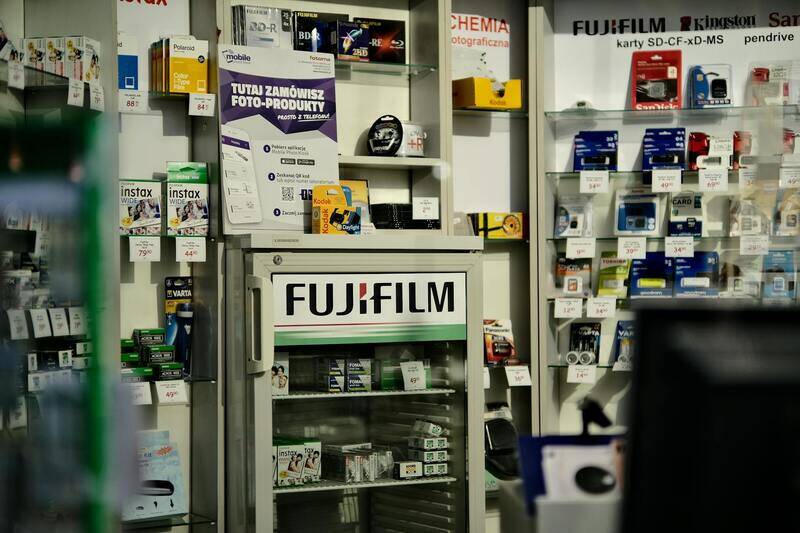
The first option is a shopfront: a unit in a mall or an office building with a counter, a couple of digital machines, and a copier. This shop handles document processing, binding, a few hundred name cards, and urgent small tasks. You can walk in with a file and leave with printed paper.
The second is a production house: a unit within an industrial building equipped with presses, cutters, folders, and finishing equipment. It handles thousands of brochures, offering large-format printing and real binding. The facility features a loading bay rather than a counter, and likely has no interest in printing your six-page document.
Both call themselves printers. Asking the second for a single bound report is just as misguided as asking the first for 5,000 perfect-bound catalogues. Most frustration in print buying stems from talking to the wrong type of business.
Where each type sits
The pattern follows rent in a straightforward manner.
| Area type | Typically hosts | Good for |
|---|---|---|
| CBD and office districts | Shopfront copy and print | Urgent documents, small quantities |
| Industrial estates | Production houses | Long runs, finishing, large format |
| Heartland malls | Small counters | Copies, personal jobs, walk-ins |
| Online only | Aggregators and remote plants | Standard products at standard sizes |
Production capacity requires floor space, power, loading access, and tolerance for noise. These requirements are best met in industrial estates, where such conditions are ideal. Meanwhile, a copy shop needs to be in areas where people are already present. This location choice comes at a premium retail rent, which contributes to the higher per-page pricing.
None of this follows a hierarchy. A shopfront that binds your tender document at 6 PM has done something no production house would handle. The skill lies in knowing which door to knock on.
What the online tier changed
A large share of print that was once handled at counters now moves through websites. You upload a file, choose from fixed options, and it arrives. This is often the cheapest route for standard work. There are two important things to know.
The first point is that "online printer" can sometimes refer to a broker. Your job is then passed to whichever print facility fits it, possibly not in Singapore. This approach is suitable for standard products and ensures that no one in the chain evaluates your file with personal judgement. Instead, they only verify that it passes automated preflight checks.
The second is that the price is low because the options are fixed. Standard sizes on standard stock at standard quantities are cheap. The moment you want something slightly different, the model stops working, and the answer is often no rather than expensive. Our note on what drives printing costs covers where the money goes.
Delivery, and what a deadline actually entails
Here is where location stops being abstract. The question is never how far away a printer is. Instead, it is about what time work has to stop so your job can be completed today.
Every printer has a cut-off point that is earlier than the closing time. Behind this cut-off is a queue, a machine schedule, a finishing step, and a courier collection. If lamination is involved, it adds a stage that cannot be rushed. A job approved at 3 p.m. might still make a 6 p.m. delivery, while the same job approved at 4 p.m. might not. The difference here has nothing to do with distance.
- Ask for the artwork cut-off time, not the opening hours.
- Ask whether the quoted time includes finishing or only printing.
- Ask when the last courier pickup is.
- If it is truly urgent, ask if you can collect the item yourself. This often saves about half a day.
- Please confirm who will be available to approve a proof when it arrives.
That final point causes more missed deadlines than any logistics problem. The job sits waiting for approval while the person who can approve it is in a meeting, the cut-off passes, and it goes tomorrow. The printer was ready. The approval was not. The wider list is in our print buyer's checklist.
Weather and traffic are real variables
Two local realities: a heavy afternoon downpour affects rider availability and impacts large format work that must travel flat and dry. Additionally, industrial estates are not always near an MRT station, making a quick proof check a 40-minute exercise rather than a 10-minute one. If you plan to attend a press check, inquire about the travel arrangements beforehand.
Choosing by job, not by postcode
A practical way to decide:
- For small, urgent, and standard requests, the nearest capable shopfront wins based on time.
- For large runs of standard products, online purchases are usually the cheapest option.
- For anything with special finishing, unusual stock, or exceptional quality requirements: contact a production house.
- For any situation where you need advice rather than filling out a form, speak to a person, regardless of their level within the organization.
The last one is more important than it seems. If your job has an unusual requirement, an online form will accept it and print the issue. Someone will notice and ask about it.
Ask us the awkward question first
When you contact us, please provide the deadline before sharing the specification details. This information often alters our recommendations. At times, it may lead us to suggest a different approach that is more time-efficient. We prefer to communicate this clearly rather than accepting a job we cannot complete on time.
Ask us about our cut-off point and what occurs after it. Inquire whether the quoted turnaround time includes completion. These two answers will provide you with more information about whether your deadline is safe than any promise on a homepage.
You can see the range under print shops and companies, or send your job and your deadline through the contact page. If the honest answer is that Thursday is not achievable, you will hear it while Friday is still an option.
